
2026-06-18
How AI Is Changing Food Hygiene Inspections
From HACCP checks to allergen controls and temperature logs — how AI food hygiene inspection software cuts audit time without cutting corners.
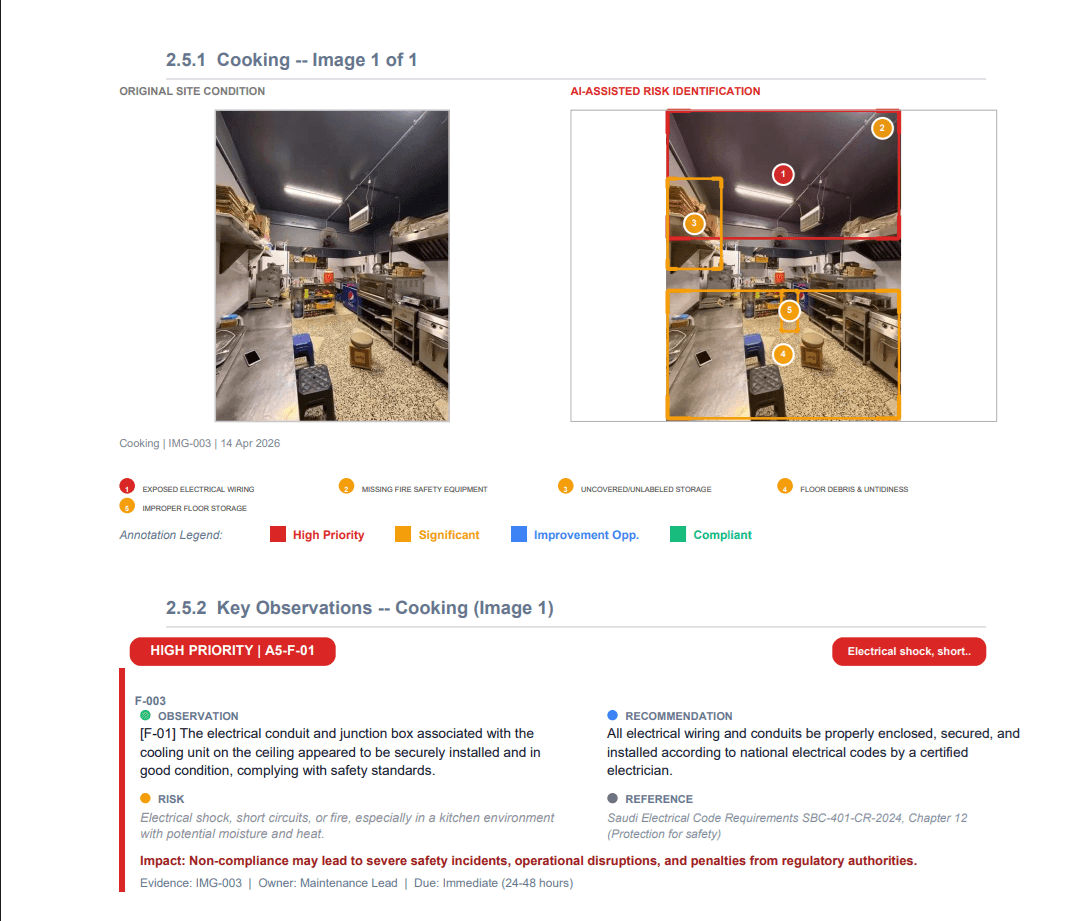
Food businesses live under constant scrutiny: unannounced EHO visits, third-party audits like BRCGS and SALSA, a live HACCP plan, allergen law, and a paper trail that has to hold up months later. The documentation burden is brutal — and it’s exactly where AI food hygiene inspection software is changing how the work gets done.
The food-safety documentation problem
HACCP monitoring, temperature logs, cleaning schedules, allergen matrices, supplier checks, corrective actions — most of it is still written out by hand. It’s slow, it’s inconsistent between staff, and a single gap can fail an audit or trigger enforcement. The information usually exists; capturing and structuring it is the bottleneck.
What AI does for a food hygiene inspection
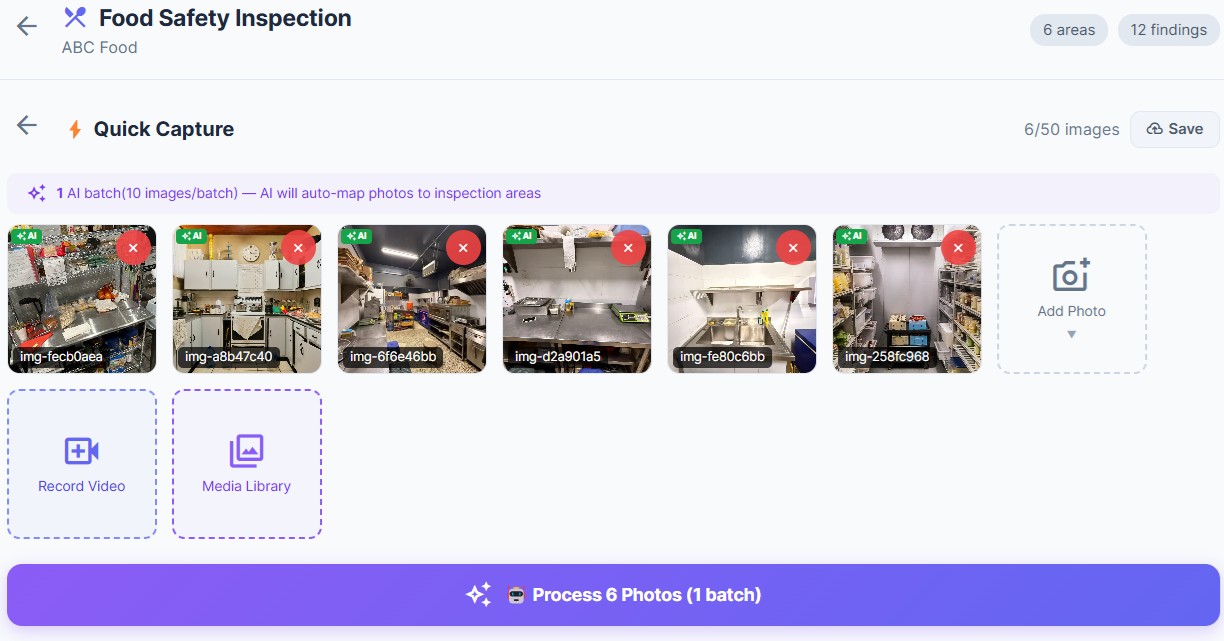
Instead of just storing a photo, AI reads it. Point the camera at a prep area, walk-in or storeroom and the software can:
- Flag hazards — cross-contamination risks, pest evidence, damaged or unhygienic surfaces, poor raw/ready-to-eat segregation
- Draft the finding, rate its severity, and write the corrective action — cited to the relevant food-safety requirement
- Speed up the routine checks: temperature readings, date labelling, decanting and storage
The inspector reviews, edits anything that needs it, and signs off. Same standards, a fraction of the write-up time — and far more consistency between people and visits.
Why this matters at audit time
Auditors and EHOs don’t just want a clean kitchen on the day; they want evidence of a system. AI inspection software gives you three things they consistently look for:
- Consistency — the same hazard is rated the same way by every inspector, every visit.
- Audit-ready reports — generated in minutes, in a standard format.
- Corrective actions tracked to closure — the proof that findings were actually fixed, not just noted.
What to look for in food hygiene inspection software
- Genuine image analysis, not photo storage next to a checkbox.
- Food-specific knowledge — HACCP, allergens, and your local food-safety law, not generic templates.
- Offline capture — walk-in fridges and back-of-house have no signal.
- CAPA to closure, not just issue logging.
- Human sign-off — AI output should always be advisory and editable.
Our food hygiene inspection software page goes deeper on HACCP mapping and the food-sector knowledge base.
Bring 5–10 photos of a real kitchen and book a demo — we’ll run a live food-hygiene inspection with you on the spot.